A clearer and safer proposal
A 50% reduction in legal requests related to the proposal.
Cliente
Simplified Proposal · MRV & Co
Role
Product Stage:
Growth
Ano
2023
01
Challenge
The proposal screen was confusing for clients, brokers, and the business, generating insecurity in the negotiation and legal risks. Poorly structured information made it difficult to read the values and compromised decision-making at the most sensitive moment of the purchase.
02
Solution
Based on qualitative research, five-second tests, and usability sessions, I restructured the proposal using familiar mental models and design heuristics. I reorganized content, highlighted essential values, and simplified communication to reduce ambiguities without increasing technical complexity.
03
Results
The improvements reduced legal issues related to the proposal by 50%, increased broker security, and helped clients better understand what they were signing up for. The solution also became a strategic foundation for future advancements in the negotiation process.
Tradeoffs
Upon reviewing the tests, I opted to intervene in the language and structure, rather than redesigning the entire process. The decision required balancing financial clarity with technical constraints and discussions with the legal team, reducing ambiguity without increasing complexity.
Overview
At MRV, the purchase proposal is a crucial step in the customer journey. It's the moment when the financial conditions are presented and negotiations begin. Despite its importance, this stage was one of the least understood by clients, brokers, and even internal MRV teams.
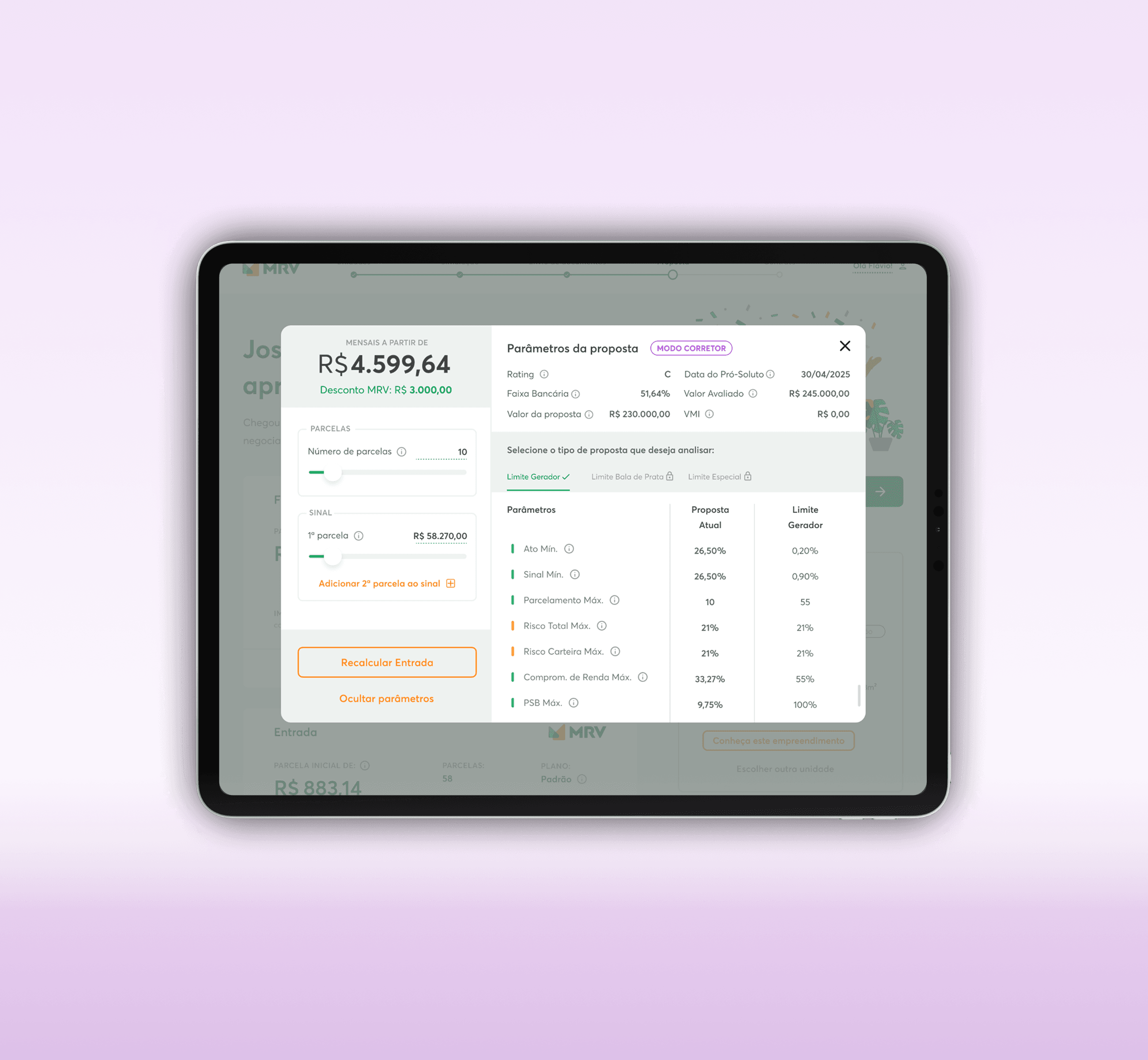
The affected client doesn't understand what they are agreeing to and how much they will actually pay. The broker, on the other hand, is left uncertain about the flexibility to negotiate and their autonomy to modify the values.
The proposal screen generated insecurity, frequent doubts, and even legal risks. Brokers often avoided showing it to clients because they didn't know how to explain the values clearly, fearing it would hinder the negotiation. In some cases, misunderstandings reached the legal team, generating conflicts at the time of contract signing.
"I avoid showing this screen to the client because they ask questions that even I don't know the answers to."
User Research and Testing
To validate the hypothesis and map the main pain points, I planned and conducted a complete research phase using qualitative and behavioral methods, including:
Five-second tests, evaluating the initial clarity of the screen.
Moderated usability tests, focusing on the interpretation of values and task completion.
Open-ended surveys, to capture spontaneous perceptions and language used by participants.
I was responsible for all stages of the process, including desk research, defining the epic's mission, aligning with stakeholders on critical points, developing the script, conducting sessions, analyzing findings, and visually presenting the results to the team and key stakeholders.
“Part of the documentation used to present the methodology and collected data.”
The research revealed several problems, including:
📊 In the 5s test, few participants correctly identified the purpose of the screen. Responses varied between "simulation," "credit result," "funding proposal," and even "party announcement";
📊 Only 1 out of 6 participants correctly found the total value of the property. The others confused it with down payment, installments, or looked for the information in out-of-context fields;
📊 All participants were unable to indicate the monthly payment amount, demonstrating uncertainty about when payments would begin and what the initial amount would be;
These findings reinforced the need for change. The proposal was unclear, overloaded with poorly structured information, and did not support the decision-making process.
Strategy and Execution
Based on the research findings, I decided not to redesign the experience from scratch, but to intervene surgically in the organization and transparency of information. Using design heuristics and familiar mental models, I sought to facilitate the reading and understanding of values by users. From this direction, I aligned with stakeholders the prioritization of changes, considering technical impacts that arose even in seemingly simple changes, such as text adjustments, hierarchy, and the inclusion of new information.
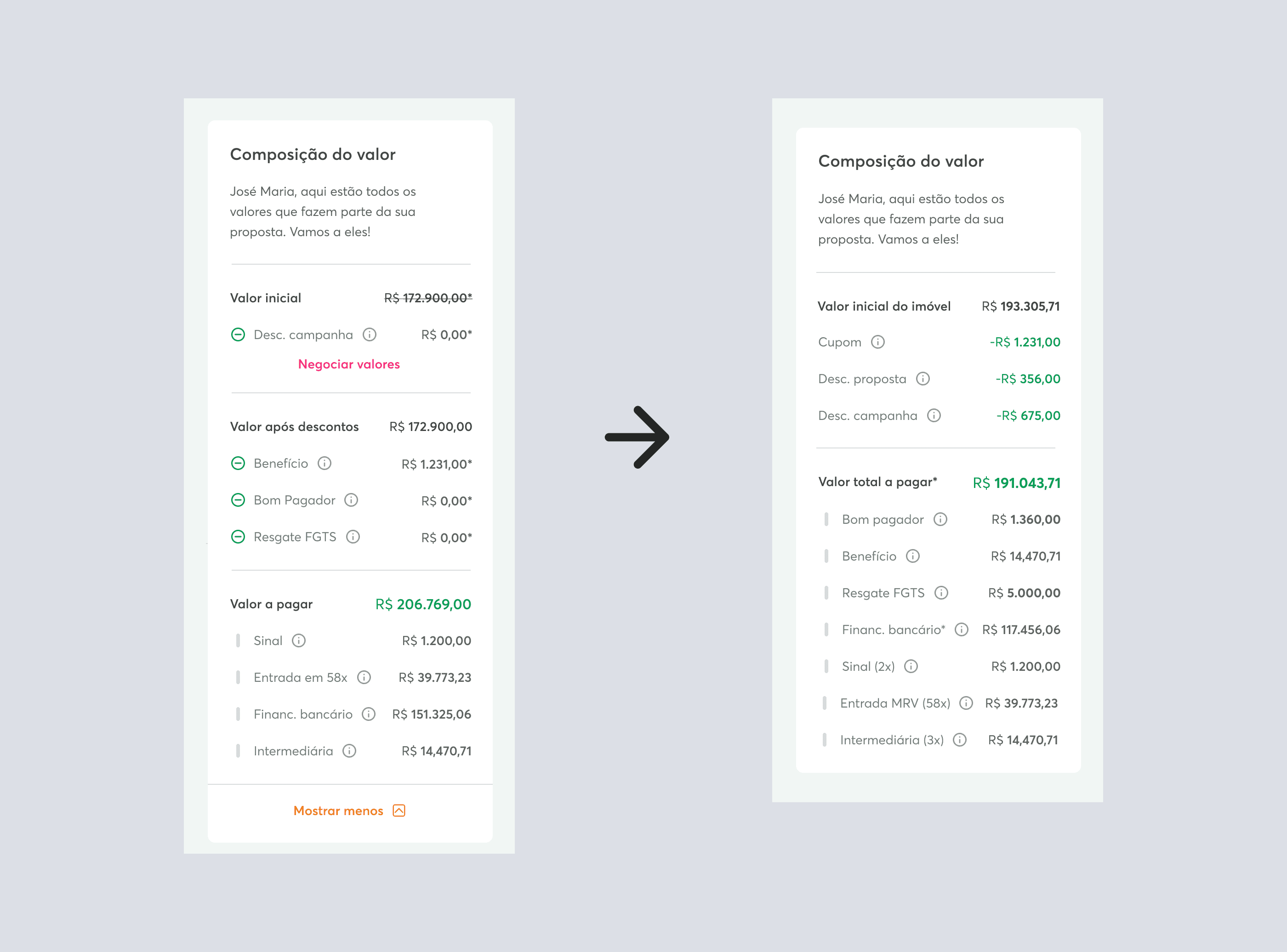
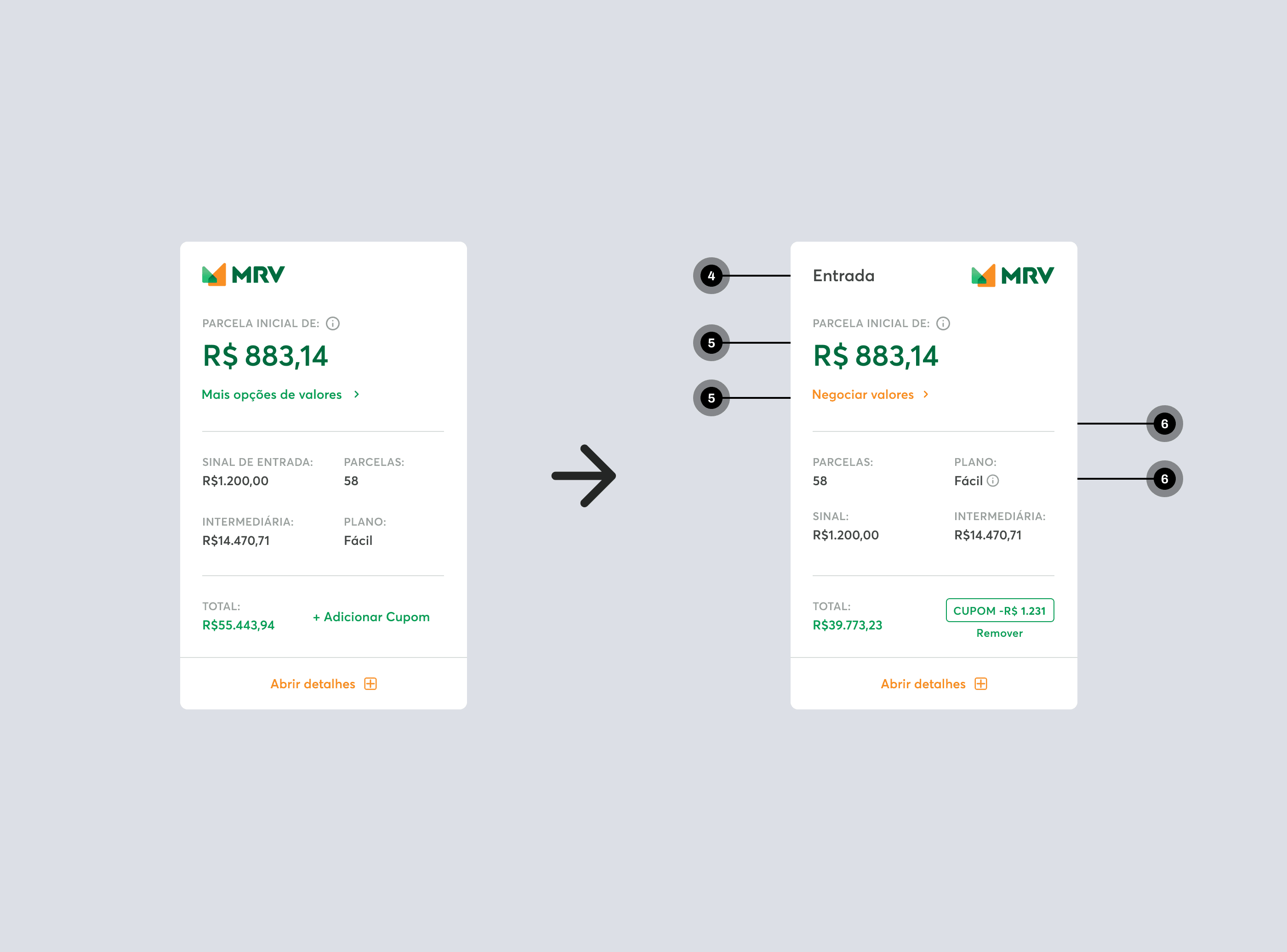
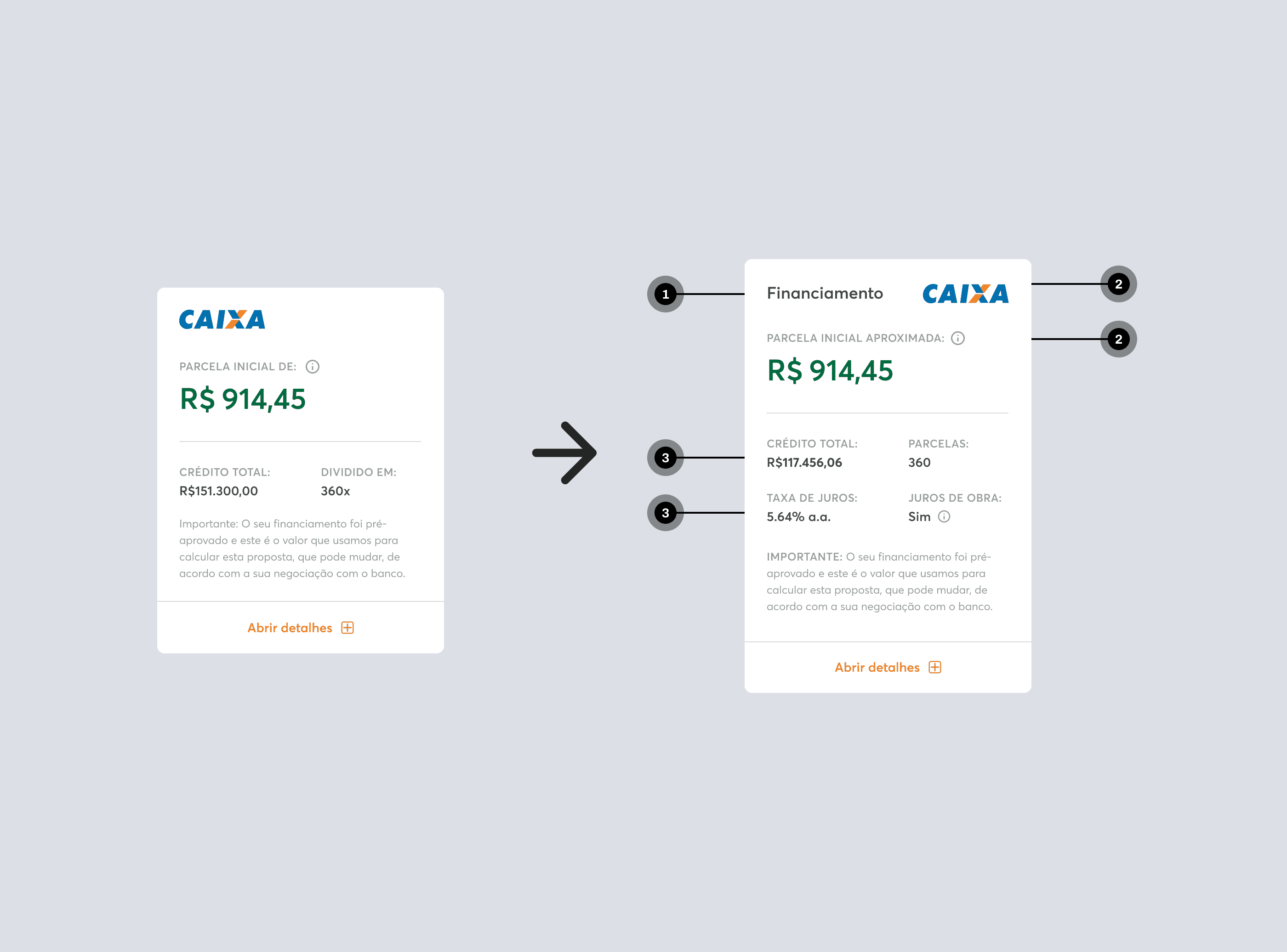
Implemented Improvements
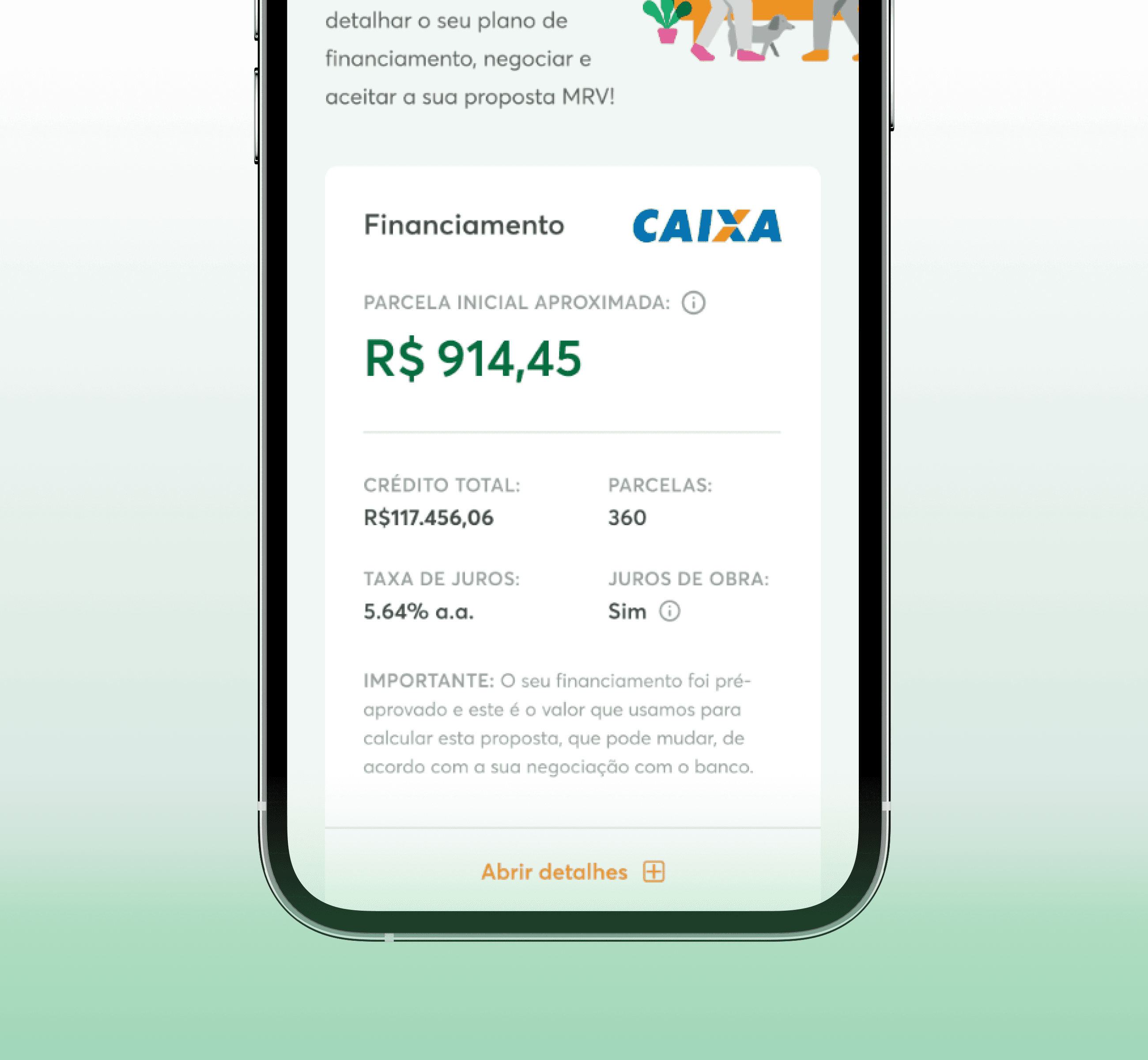
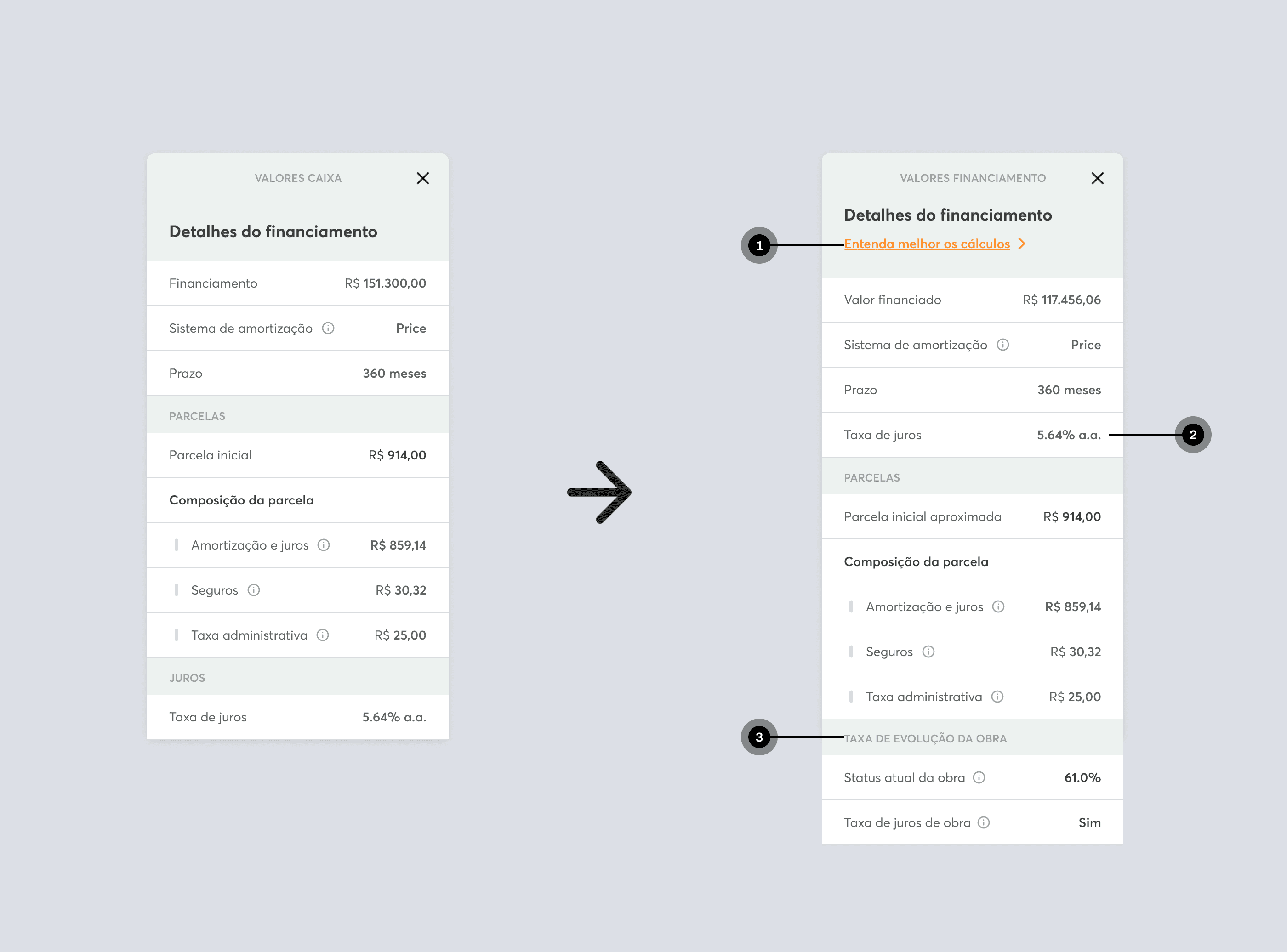
Reorganization of content following more familiar patterns, such as e-commerce;
Visual highlighting of essential values, such as down payment and total property value;
Inclusion of tooltips and links to FAQs explaining technical terms in the flow;
Standardization of language and improvement of information hierarchy;
Removal of irrelevant or conflicting fields;
Results
📉 50% reduction in legal calls related to proposals
In addition, there was a significant improvement in experience and behavior, such as:
✅ The decrease in legal calls represented a saving of time and effort for business areas
✅ Clients better understand what they are contracting, and brokers can make adjustments with more confidence
✅ Strategic basis for future evolutions, enabling new initiatives in the proposal and negotiation journey
✅ Less experienced brokers began using the screen with more confidence, reducing dependence on extra support
Lessons Learned
In addition to the impressive results, it was possible to note additional insights after use:
📌 Small changes in language and layout had a high impact, with low development effort
📌 Simplification and transparency proved to be one of the most important points for the business