Negotiating with more predictability
It brought transparency and clarity to brokers and clients, with a high average satisfaction rating (4.7/5.0).
Cliente
Proposal Parameters · MRV & Co
Role
Product Stage:
Growth
Ano
2024
01
Problem
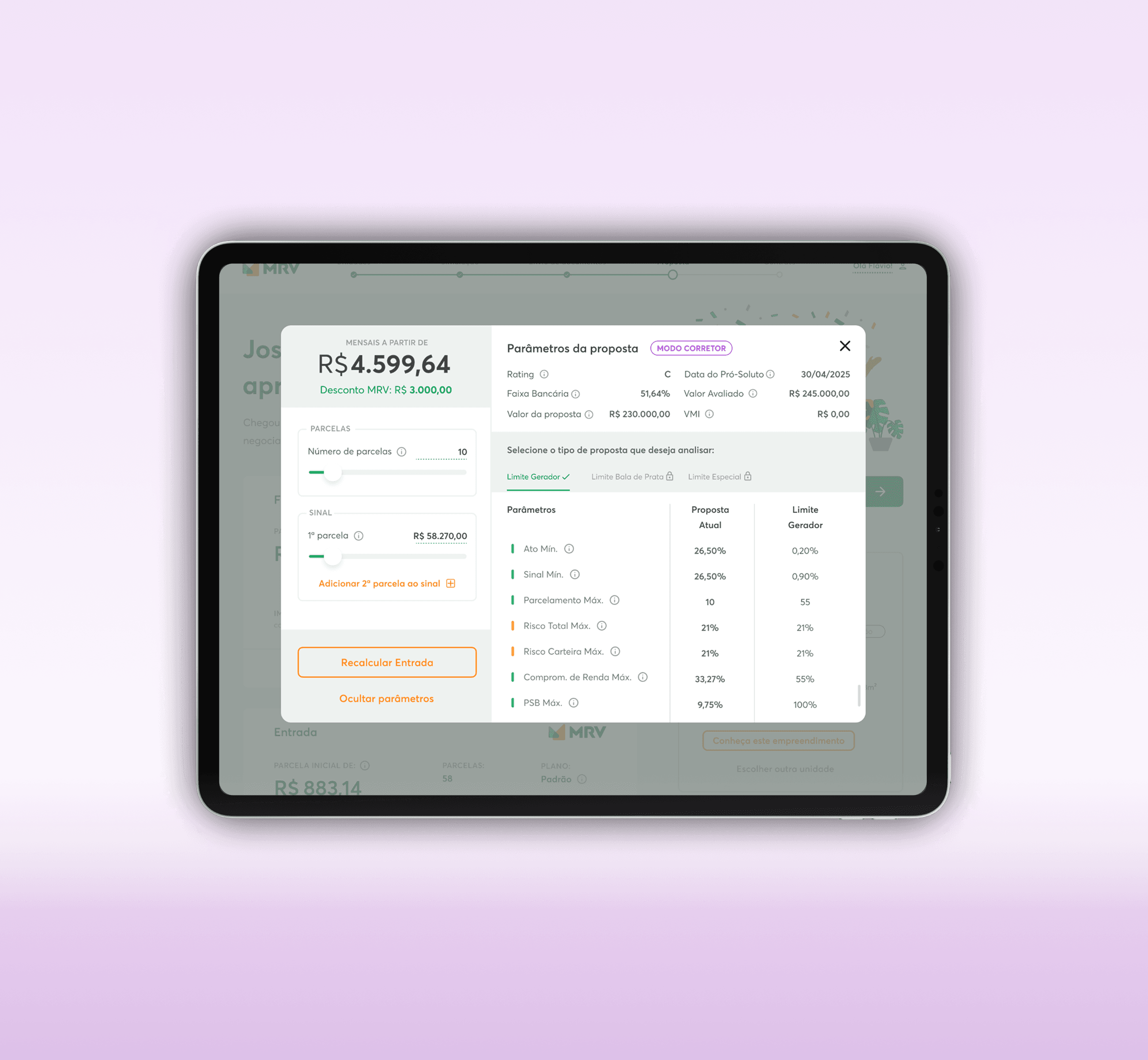
Brokers struggled to understand the parameters that determine proposal approval. The lack of transparency, information overload, and low comparability reduced autonomy in negotiation and sales conversion.
02
Solution
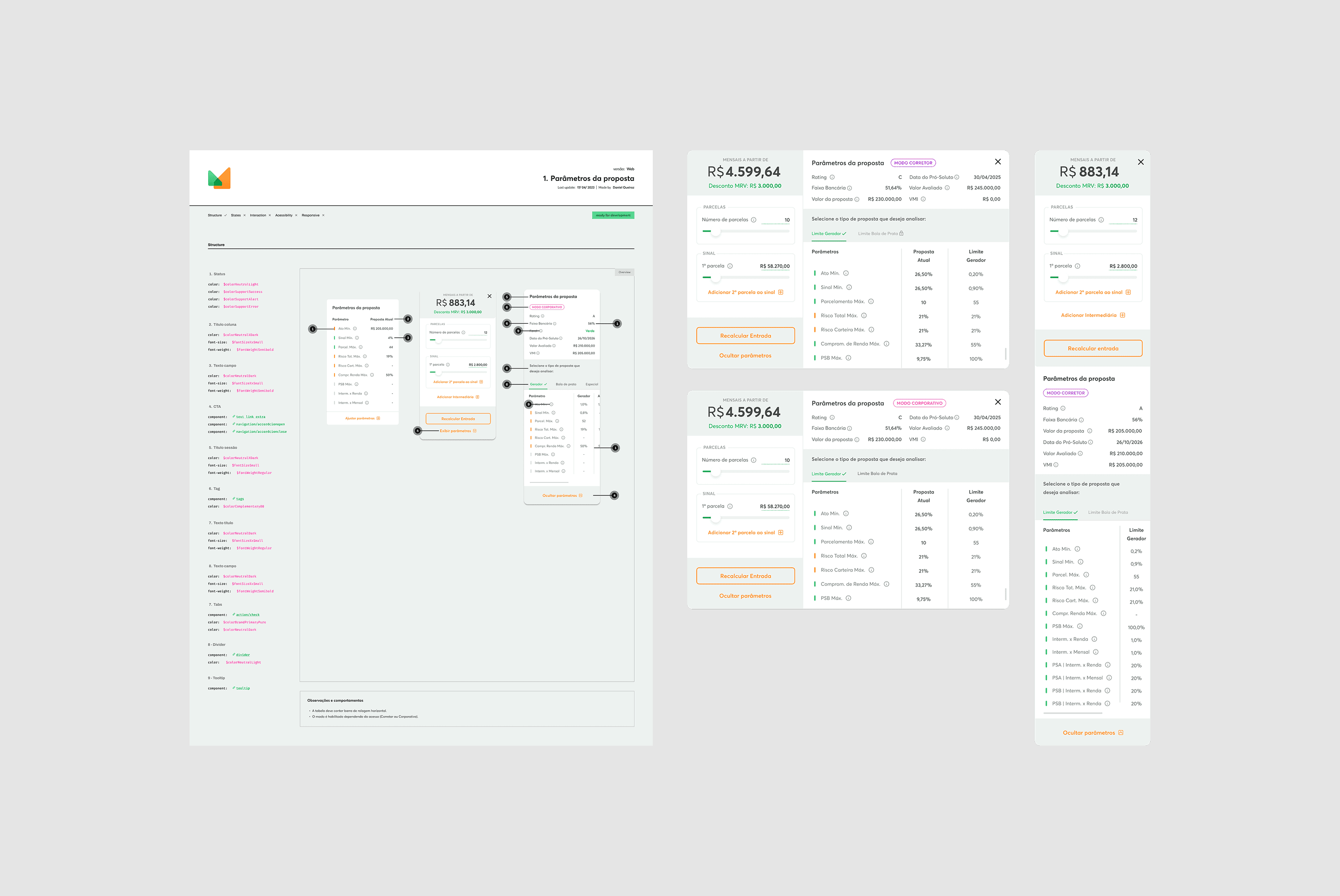
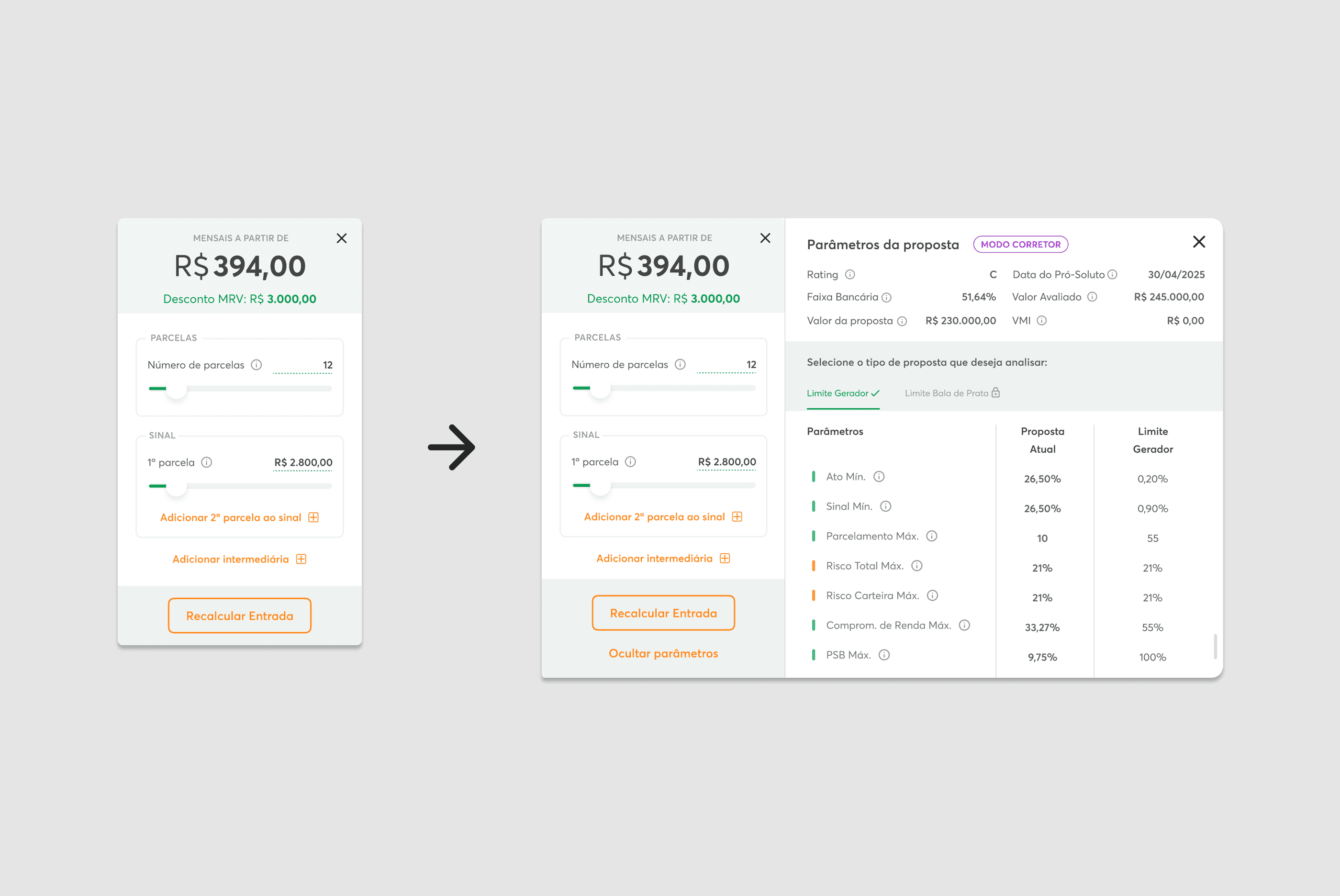
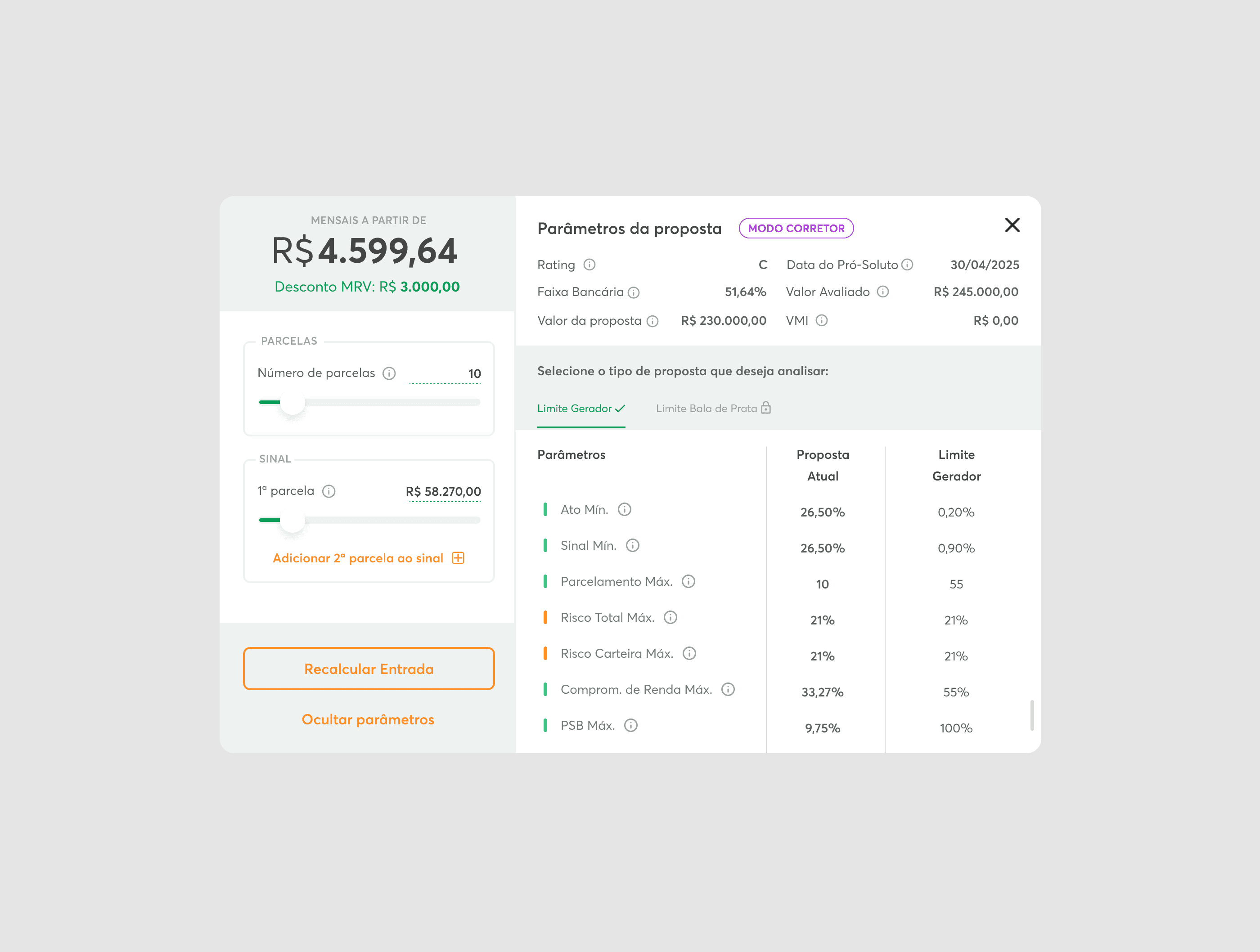
Based on the results of the immersion, I prioritized addressing the lack of clarity in the parameters. I restructured the flow within the existing modal, focusing on transparency, quick readability, and usability, validating hypotheses with prototypes, A/B testing, and moderated sessions.
03
Results
The solution increased broker safety, reduced rework, and resulted in high satisfaction (4.7/5). In addition to improving the experience, it opened up strategic space for future developments, including the use of AI to support trading.
Tradeoffs
Since I couldn't rebuild the experience from scratch due to the deadline, I had to intervene surgically, even with limitations of space and usability. I prioritized clarity and broker autonomy, seeking to at least validate formats with stakeholders before development to reduce risk.
Overview
We conducted a discovery phase involving immersion, interviews, surveys, and conversion analysis. The objective was to understand how brokers, managers, and supervisors used the proposal and what the biggest friction points were in the negotiation stage.
The research revealed problems mainly in the Proposal Parameters, which are rules defined by the business that define and limit the broker's ability to adjust and negotiate. Among the main findings, we can highlight:
High Complexity
19% of brokers found it difficult or very difficult to understand.Lack of transparency in adjustments
Brokers did not clearly understand why a proposal was rejected or how to adjust it to meet the desired conditions.Unclear parameters
Difficulty in locating rules, excessive information on the "credit approved" screen, and difficulty in comparing conditions side-by-side.
"Brokers lacked clarity on the parameters that define whether a proposal is approved or rejected."
Strategy and Execution
During the ideation phase, several hypotheses emerged, ranging from more advanced automations (such as support bots and AI-powered suggestions) to workflow improvements related to commissions.
To maintain focus and ensure quick deliveries, prioritization was necessary. The criterion used was to directly address the most critical points identified in the research: lack of clarity in parameters, low broker autonomy, and difficulty in comparing proposals.
Decisions and trade-offs:
🔀 Leverage the existing modal instead of creating a new, specific solution, due to development time and cost.
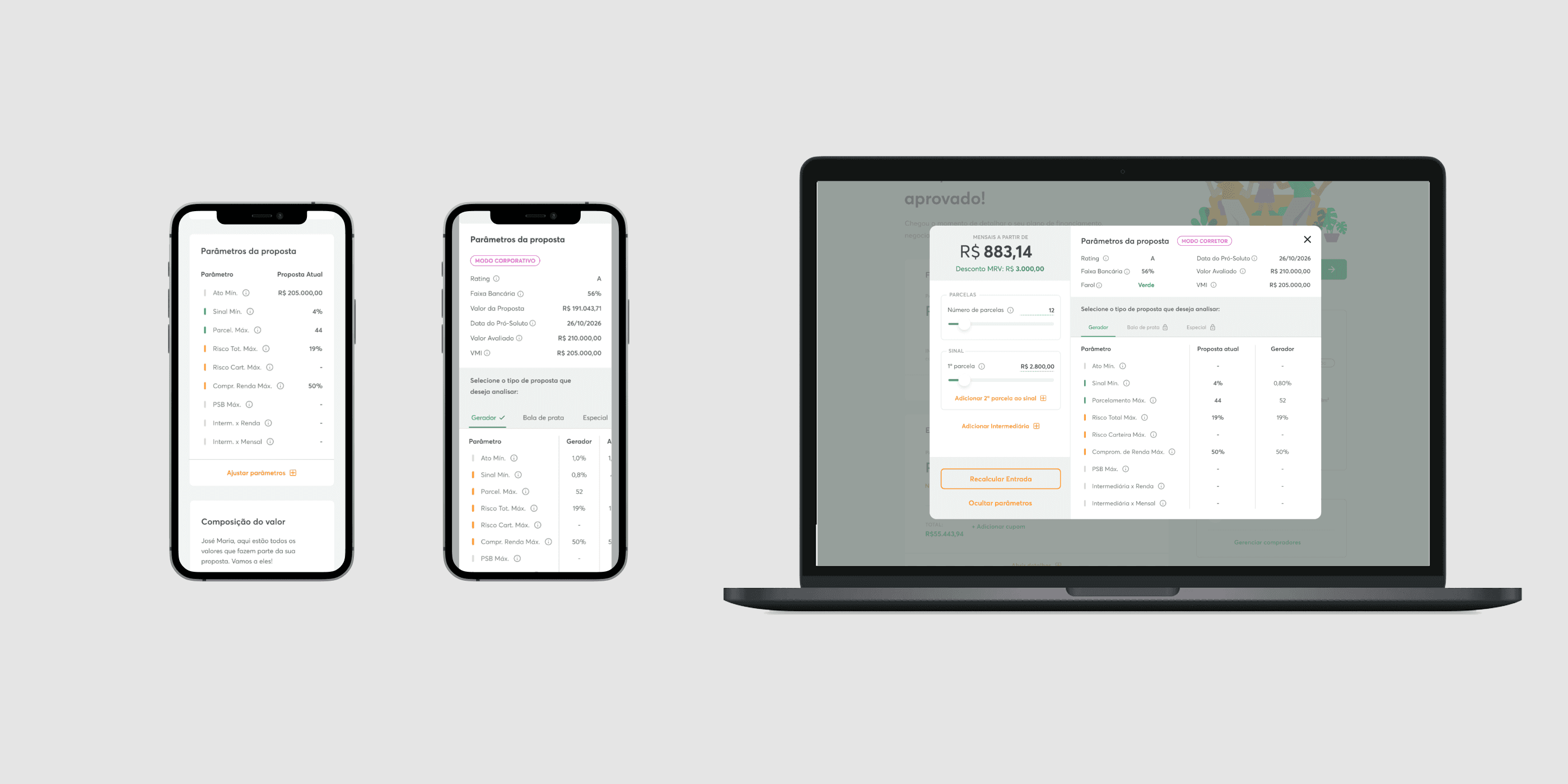
🔀 As the modal would be the only option, we paid attention to mobile usability, especially testing table vs. list reading.
Validation
To validate the solution before development, I built navigable prototypes on mobile and desktop and conducted sessions with 5 participants, including managers, supervisors, and brokers. The goal was to evaluate everything from understanding the problem to practical experience with the new parameters.
The meetings were held remotely via Teams, using Useberry to record navigation, clicks, heatmaps, execution time, and completion rate.
The test was planned to meet different objectives: to map the users' context in relation to the problem hypothesis, to evaluate the effectiveness of two concepts through an A/B test on mobile (table vs. list), to identify usability points in the user journey, to explore behavioral changes after using the functionality, and finally, to capture new pain points and opportunities beyond the initial scope.
During the sessions, participants received specific tasks, while I observed their interactions and perceptions. At the end of each concept, I asked targeted questions and, in the desktop version, I also investigated device preference for the negotiation process.
What we confirmed/learned:
📊 A/B Testing (Mobile)
Concept A (Table) scored 60% and Concept B (List) 40%. Both were well-evaluated, with no significant differences.
✅ 100% Completion
All users were able to change the bid limits and display all parameters without difficulty.
💡 Perceived Value
The reaction was extremely positive. Participants demonstrated satisfaction and even delight when using the functionality, expressing enthusiasm for adopting it in their daily work.
📱 Context of Use
100% confirmed that the desktop is the primary device, while mobile serves as a consultation support during the negotiation phase.
Adjustments before launch:
⚠️ We refined microcopy and contextual help with labels, tooltips, and legends according to the broker's language.
⚠️ We have identified the need to enhance training and evolve the solution to support less experienced brokers.
Results
📈 High satisfaction: 4.7/5 (Jun/24) and 4.6/5 (Oct/24), with approximately 80% giving the highest rating
📈 35% of brokers effectively tested the parameters
Furthermore, an impact on business and experience was observed:
✅ Reduction in rework and errors, as brokers began negotiating based on clear parameters, without depending on credit to validate each attempt
✅ Greater autonomy and efficiency of experienced brokers, who reported more confidence in negotiations
✅ Strategic potential for evolution, allowing the application of technologies such as AI to increase value in the future
Lessons Learned
Despite the impressive results, some improvements or adjustments were noted:
📌Partial adoption: a large portion of brokers still do not access the resource; it is necessary to investigate barriers
📌Validated value perception: among those who use it, satisfaction is high, confirming the success of the solution
📌New brokers face Challenges with business rules, requiring enhanced training and support.